
The people, the plans, the pie… and how to enjoy more of it together as a neurodiverse family.

Ah, the holidays. Peace on earth. Goodwill toward men. A surprisingly heated discussion about what time you said you were leaving your mother’s house. Oh, and it’s an election year… so someone will be explaining why their politics are best while the rest of us are just trying to get the gravy passed.
“Just a small family get-together” somehow means 27 people, three barking dogs, and a football game loud enough for the neighbors to follow along. One person is making memories. Another is testing how long a bathroom break can reasonably last. Meanwhile, “we’ll leave after dinner” has expanded to include dessert, gifts, cleanup, and a full review of everyone’s medical history.
We love these people… Okay, some we tolerate. Some we bless their hearts and sit as far away from as possible.
I have always loved Thanksgiving. I want good food, laughter, time to thank God, and the chance to enjoy the people I’m with. My husband’s family Thanksgiving, however, came with a level of anxiety I had not adequately trained for.
My husband is autistic, has ADHD, and is extremely intelligent. His family celebrated Thanksgiving the same way every year, despite considerable evidence that very few people were enjoying the process. His mother would spend weeks trying to make everything perfect, cleaning beyond anything reasonable and making herself sick despite having COPD. His brother-in-law became so anxious he would make excuses to leave so he could get sick. He has a sister who hates Christians and made sure to let me know on a regular basis, passive-aggressive arguments conducted in front of everyone, and sometimes flat out shouting when subtlety apparently wasn’t getting the job done.
Then there was the aunt and the sacred family ravioli. One year my husband was stirring it while it boiled. She hovered over him correcting his every move, shaking and telling him everything he was doing wrong or at least differently than she would stir (how many ways are there really to stir a pot of boiling ravioli?). She could make coffee nervous on a good day, and this was Thanksgiving.
I really wanted to enjoy the holidays with my husband, our daughter, and the family who preferred love over their love of hate. I wanted us to cook together, laugh, make our own family memories, and actually feel thankful. I wanted a day without shutdowns, meltdowns, and anxiety. A day not followed by hours of stimming and trying to recuperate. Eventually, I told him I wanted Thanksgiving at our house, in our own way.

So we changed it. We cooked what we enjoyed, together, without a strict timeline or anyone becoming distressed over our technique. We could take a break, eat when the food was ready, and really enjoy everyone who came over. Love, laughter, and meltdown-free bliss. It was the Thanksgiving I had wanted us to have.
We didn’t shut out his family. We reserved Thanksgiving Day for ourselves and offered to celebrate with them on another day. They agreed. We also agreed with each other that we would stop letting the familiar stress decide how our holidays went.
That experience is why I encourage families to look at their plans before the season gets underway. When someone needs a break, can they take one without being made to feel guilty? Can the host simplify the meal? Can you spend less, stay for a shorter visit, or celebrate on a different day? Can everyone have a little more room to enjoy being there? Can we stop listening to what everyone else says we should do and decide what we want for ourselves and our families?
Thanksgiving is an opportunity for gratitude. Christmas is a celebration of Jesus. Both give us a chance to show grace, mercy, and love to the people around us. Our plans should help us do that.
And “we’ve always done it this way” deserves an honest follow-up: Is this working for the people we love?
If someone cries every year, the host spends weeks making herself sick, and half the guests are looking for an escape route, perhaps the tradition could use a review.
First, decide what you are actually celebrating

Thanksgiving should give us a chance to thank God, recognize what we have been given, share generously, and enjoy being together. It becomes difficult to do any of those things when everyone is focused on perfect food, old grievances, or whether someone has violated the family seating arrangement.
Before making plans, ask your household what they would enjoy. What are they thankful for? Who would they like to spend time with? What would make the day meaningful? You may discover that your children care much more about playing a game with you than eating off the good dishes. Your husband may love the meal and time with family, provided the visit has an end, and he can walk outside every now and then. You may want to sit down and enjoy a conversation instead of spending the entire day serving everyone else.
Choose a few things that reflect those answers. Have a meal people enjoy. Invite everyone to share something they are thankful for, allowing someone to write it down or pass if speaking in front of the group is uncomfortable. Pray together. Make room for conversation, a walk, or something fun. If you want to serve someone outside your household, choose something your family can realistically do without turning generosity into another exhausting obligation. Make it your own.
As Christmas approaches, bring the same thoughtfulness to it. Jesus is the reason for the season. We are celebrating His birth, God’s love, and the gift of a Savior. It is worth considering whether the way we spend December leaves us enough time and patience to remember that.
Read the Christmas story together. Choose a church service your family can participate in meaningfully. Talk with your children about why you celebrate. You don’t have to fill every evening with an activity for Christmas to matter. A quiet evening remembering Christ’s birth can be deeply meaningful, even if nobody made themed snacks.
Keep the traditions that bring people together. Change the ones that don’t.

A tradition can connect generations and carry beautiful memories. It can also outlive the circumstances that made it enjoyable. Families grow. People age. Children have different needs. Work schedules, finances, health, and capacity change. The celebration can change with them.
Look at the parts of the day that repeatedly create difficulty and identify what needs adjusting. If hosting a full dinner is exhausting, divide the dishes among guests or order part of the meal. If three family visits leave the children overwhelmed and the adults arguing, choose one visit, alternate years, or celebrate with different relatives on different days. If Christmas morning always feels rushed, keep the morning at home and arrange visits later.
You can preserve the part people love without keeping every demand attached to it. Make the family ravioli, but let someone stir it without requiring an apprenticeship. Keep the Christmas breakfast, but let everyone wear comfortable clothes. Take the photograph before the children are exhausted rather than insisting it happen at the same time it always has.
When explaining a change, be warm and clear: “We want to enjoy the day with everyone, so we’re simplifying the meal this year.” Or, “We’re spending Christmas morning at home and would love to see you in the afternoon.” There is no need to present a legal defense of your plans. Give people time to adjust, and remember that someone’s initial disappointment does not automatically mean you made the wrong decision.
Make room for people to enjoy the day in different ways

In a neurodiverse family, the same gathering can feel very different to each person. You may hear laughter, music, and happy conversation. Your autistic husband or child may be struggling to follow one conversation while several others compete with the television, kitchen noise, strong smells, and people moving around them.
Wanting a break does not necessarily mean they dislike your family or don’t appreciate the occasion. They may be working hard to participate and need some time away so they can continue enjoying it. Pressuring someone to keep going after they are overwhelmed can contribute to a meltdown or shutdown. It is much more useful to plan for what helps than to wait until they are no longer coping. If cooking isn’t your family’s thing and it is stressful, maybe you should order takeout.
Ask ahead of time: “What part of the day is likely to be difficult? What would help you enjoy it?” Perhaps they need a quiet room, a walk after dinner, familiar food, or a shorter visit. Someone may love helping in the kitchen but find sitting in a crowded living room difficult. Another may enjoy being present without wanting to contribute to every conversation.
Make those options part of the plan. “After dinner, you can take some time in the other room. We’ll do gifts around three, and I’ll check in with you before then.” If you’re hosting, you can simply let people know there is a quiet space available. It doesn’t need to become an announcement about anyone’s diagnosis.
Then allow the break to be a break. Following someone into the quiet room to ask why they aren’t enjoying themselves does introduce a small obstacle to the quiet.
Children benefit from the same consideration. Explain what will happen, bring something familiar to eat or do, and show them where they can go if they need a quieter moment. Let them greet relatives without requiring hugs. If opening gifts in front of an audience is difficult, find a different way. A child can appreciate a gift without delivering an acceptance speech.
Grace also includes the person who is hosting, parenting, or managing the day. Agree on how responsibilities will be covered when someone steps away. One spouse might take a break after dinner and handle the dishes afterward, giving the other time to sit and visit. Both adults can have time with relatives while taking turns helping a child. Everyone’s needs belong in the conversation.
Give each other clear plans and useful jobs

Many holiday arguments begin with people believing they agreed when they understood different things. “A short visit,” “help with dinner,” and “leave afterward” all leave plenty of room for interpretation.
Before the day, agree on arrival and departure times, who is coming, what you are bringing, and what each person is responsible for. A quick message can be enough: “We’re arriving at noon, eating at one, and leaving at four. We’re bringing dessert. You’re handling drinks, and I’m bringing the food.” If the meal time is uncertain, plan around that rather than hoping nobody gets hungry.
For someone with ADHD or difficulty organizing tasks, write down the job and deadline or use a reminder. Choose responsibilities that fit the person’s strengths, and make clear what completing them involves. Handling gifts for your relatives can include buying, wrapping, and getting them there. Otherwise, “I finished the shopping” can mean six shipping boxes have been left in the hallway for someone else to transform into Christmas.
Children can contribute, too. They can set out napkins, choose a game, help prepare food, or clear their places, depending on their age and abilities. When the work is shared, more people get to enjoy what they helped create.
Be thoughtful about the schedule around the gathering as well. A busy Christmas Eve followed by an early morning, a long lunch, and an evening party may be more than your family can enjoy. Leave recovery time. A free afternoon can stay free. You do not have to turn it into an opportunity.
Spend according to your life, rather than trying to impress someone else

It is easy for holiday spending to grow one “little extra” at a time. Gifts, food, travel, decorations, outfits, events, and stocking fillers somehow become an amount nobody intended to spend.
Before shopping, agree on what you can comfortably afford and where you want that money to go. Decide who you are buying for, what you will spend, and whether some gifts could be shared, homemade, or replaced with time together. A gift exchange among adults may work better than everyone buying for everyone. A simpler meal may free up money for something your family would actually enjoy.
Talk honestly about gift expectations. One person may love a surprise, while another is relieved to receive a specific suggestion. “Here are three things I would enjoy; you choose” can leave room for thoughtfulness without requiring mind reading. If you would prefer an evening together or something practical, say that.
Christmas does not require you to make January frightening. The people who love you do not need you to go into debt to demonstrate it. And the people you are trying to impress may be too busy worrying about their own table decorations to notice yours.
Let the budget support the celebration you want to have. Your family is more likely to enjoy your company when you aren’t quietly calculating the cost of every bite.
Give the grievances a day off
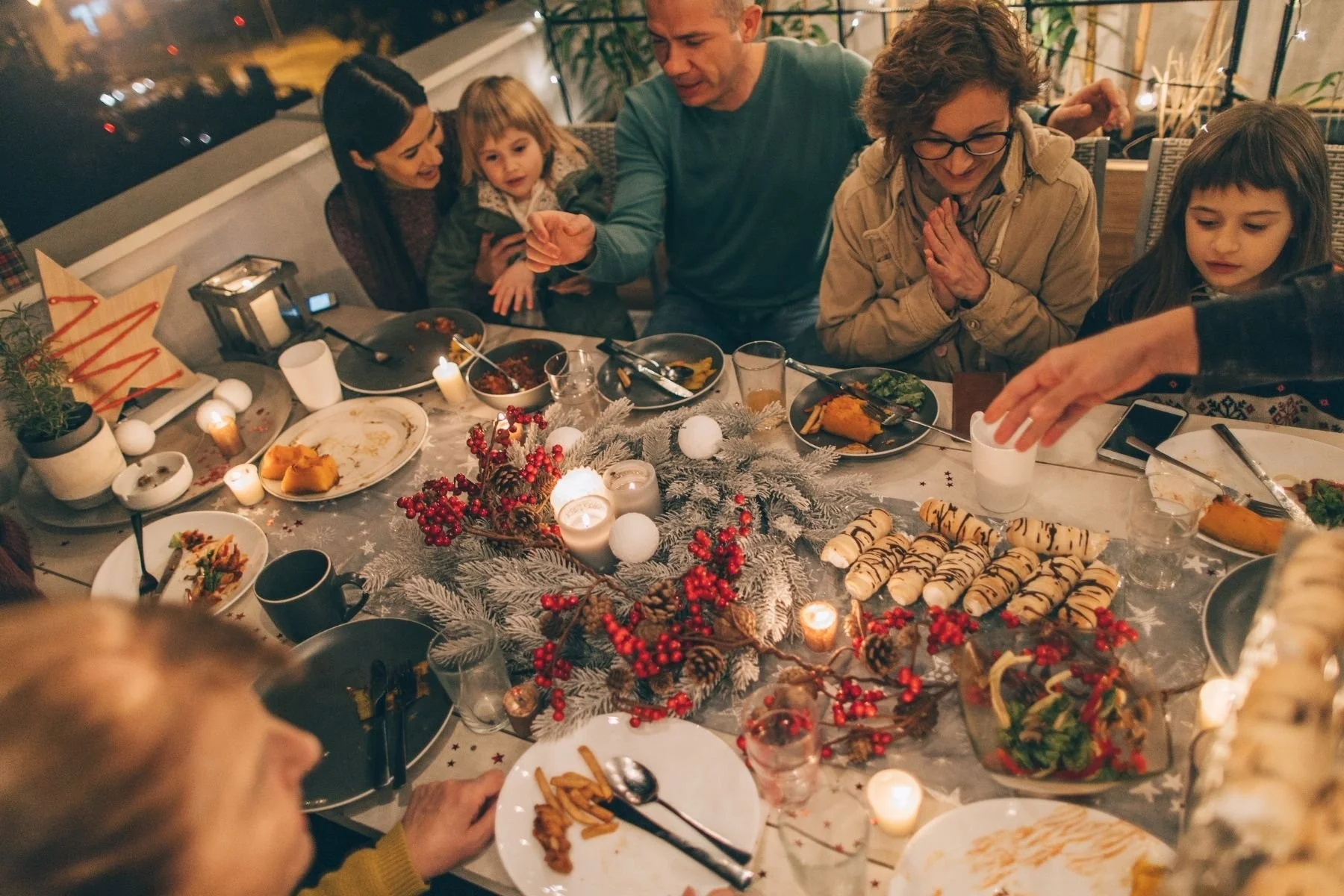
Some families have been having the same argument for years, with new material added each holiday. Politics, parenting, religion, somebody’s marriage, and something that happened in 2008 can all arrive at the table before the potatoes.
Thanksgiving dinner is rarely a good setting to resolve those issues. Putting a grievance aside for the gathering does not mean it never mattered. It means choosing a better time and place to discuss it, while allowing the day to serve its purpose.
If there is a recent disagreement, acknowledge it before arriving when possible: “We still need to talk about what happened, but I don’t want us to spend today hurting each other. Let’s agree on a time tomorrow and give ourselves permission to enjoy the family today.” Then honor that follow-up rather than using the holiday to avoid the issue indefinitely.
You can also decide together how you will respond if a familiar argument begins. “We aren’t going to agree on that today. Tell me how your trip went.” Or, “Let’s leave that conversation for another time.” Change the subject, move to another room, or invite someone to join you in a task. You don’t have to attend every argument you are invited to.
As Christians, we are called to compassion, kindness, humility, gentleness, and patience, with love holding those qualities together in Colossians 3:12–14. Those qualities have very practical uses around a crowded table. They influence whether we embarrass someone, insist on the last word, bring up an old failure, or allow another person a little room.
You may not be able to make every relative agreeable. You can decide what you contribute and how you support your husband, wife, children, and guests. Sometimes showing mercy means allowing someone to have an awkward moment without making it the afternoon’s entertainment.
Plan for love and laughter, too

We make room for the meal, the travel, and the gifts. Make some room for enjoying each other. Choose a game people can join without pressure. Watch a favorite movie. Go look at lights. Let someone tell the funny story everyone has heard before. Sit with the person who doesn’t get much company.
Humor can make a difficult moment lighter when people feel loved. Laugh together about the crooked tree or the pie that didn’t survive the drive. Be more careful with jokes aimed at someone’s needs, mistakes, or discomfort. Being the family punchline is a very different experience from sharing the laugh.
If the day begins to go sideways, simplify. Turn down the television. Put away a task that can wait. Offer food, quiet, or a change of activity. Ask, “What would help right now?” You may be able to enjoy the rest of the day without rescuing every part of the original plan.
For me, having a happy marriage now does not erase the hard years. It reminds me why making practical changes matters. Families can learn to understand each other better. We can stop demanding the same performance every year and start creating occasions people genuinely want to share.
This week, talk about what you want the season to feel like. Choose the traditions worth keeping, the demands you can remove, and the support each person needs. Be willing to change the plan in service of the people.
Thanksgiving gives us a chance to be grateful. Christmas brings us back to Jesus. Both give us opportunities to show grace, mercy, generosity, and love in the ordinary ways people actually experience them.
There is plenty of room for joy in a holiday that looks different from the one you have always had. Even the ravioli can survive a new stirring technique.
If your family needs a different plan this year, we can work through the specifics together. Through Neurodiverse Coaching, I work with individuals and couples on communication, expectations, and practical strategies for family life. Book a free 30-minute consultation, and let’s talk about making more room for love and laughter this season.
Read next: Tips for a Peaceful Thanksgiving with a Neurodiverse Family