

When we got married, I had no idea my husband was autistic. I knew he had been diagnosed with ADHD as a kid, but back then, I only knew what I had always been told about ADHD: it was a diagnosis for kids who were hyperactive. I knew he was dyslexic. I also knew he was extremely gifted and qualified for Mensa. But I was missing a big part of the picture…
I thought he and I were the perfect fit. He could talk about anything with me, having very deep and thought-provoking conversations about a wide range of topics. I had a wide variety of interests as did he, with many overlapping. After all, we met storm chasing, in the middle of nowhere and we clicked immediately. After talking to him for only 10 minutes, I thought to myself, “I’m going to marry him someday.” And I did. 2 years later.
Three months into our marriage, he had his first meltdown. I was in absolute shock. I had no idea what to do and was honestly scared. I had never seen him like this. Was he like this? Why? I had no idea what was happening over what I thought was a small, inconsequential thing that did not matter whatsoever. Little did I know, this was only the start… It happened again, and again, and again… I found myself asking, “what have I gotten myself into?”
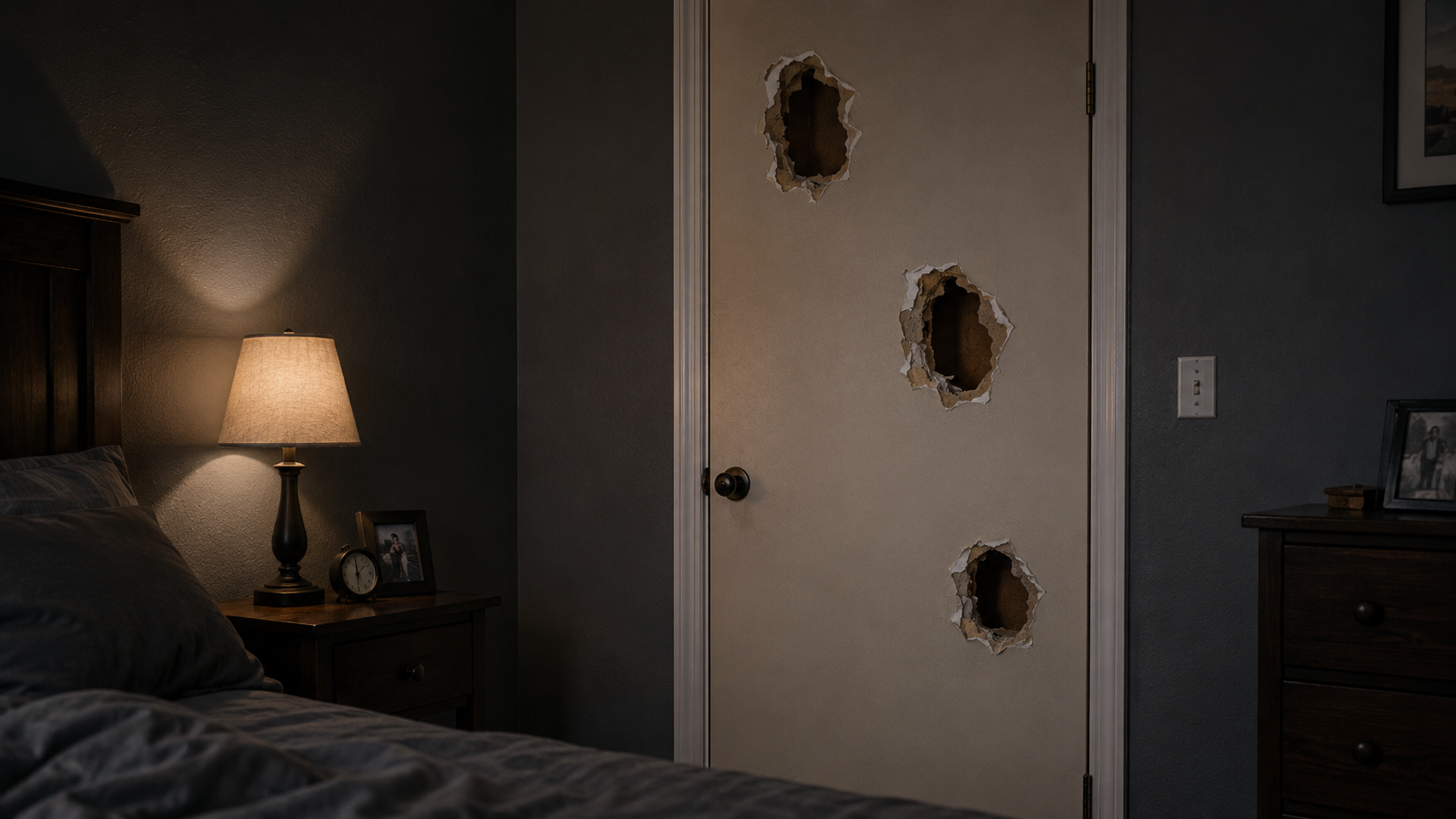
I won’t go into all the details in the blog as it would turn into a book if I did. But things over the next decade weren’t great. Sometimes they were horrible. Meltdowns, shutdowns, addictions, special interests, total lack of empathy, very little if any recognition of my needs… you name it. I did everything I could to keep our household afloat. As a coach who talks to neurodiverse couples, neurodiverse individuals, and neurotypical spouses day in and day out, I can tell you confidently, our case was pretty extreme. Eventually, it was determined that he was, in fact, autistic as well.
When things were bad, I did what most people do. I started to search the internet to help me figure out what was going on and to find help. I joined “support” groups (many of these groups only made me feel far worse and build resentment towards my husband and dragged me down instead of built me up). I started listening to “experts” who made me feel like I could try to make things better for a while, but in the end, there wasn’t much hope. Many of them had made things better for a season in their own marriages, then eventually divorced themselves. This wasn’t promising for me.
The more I searched, the more I watched, the more negative information filled my feed and I felt worse and worse about my marriage. What I didn’t realize, this was no accident...
The Internet Will Feed What You Search
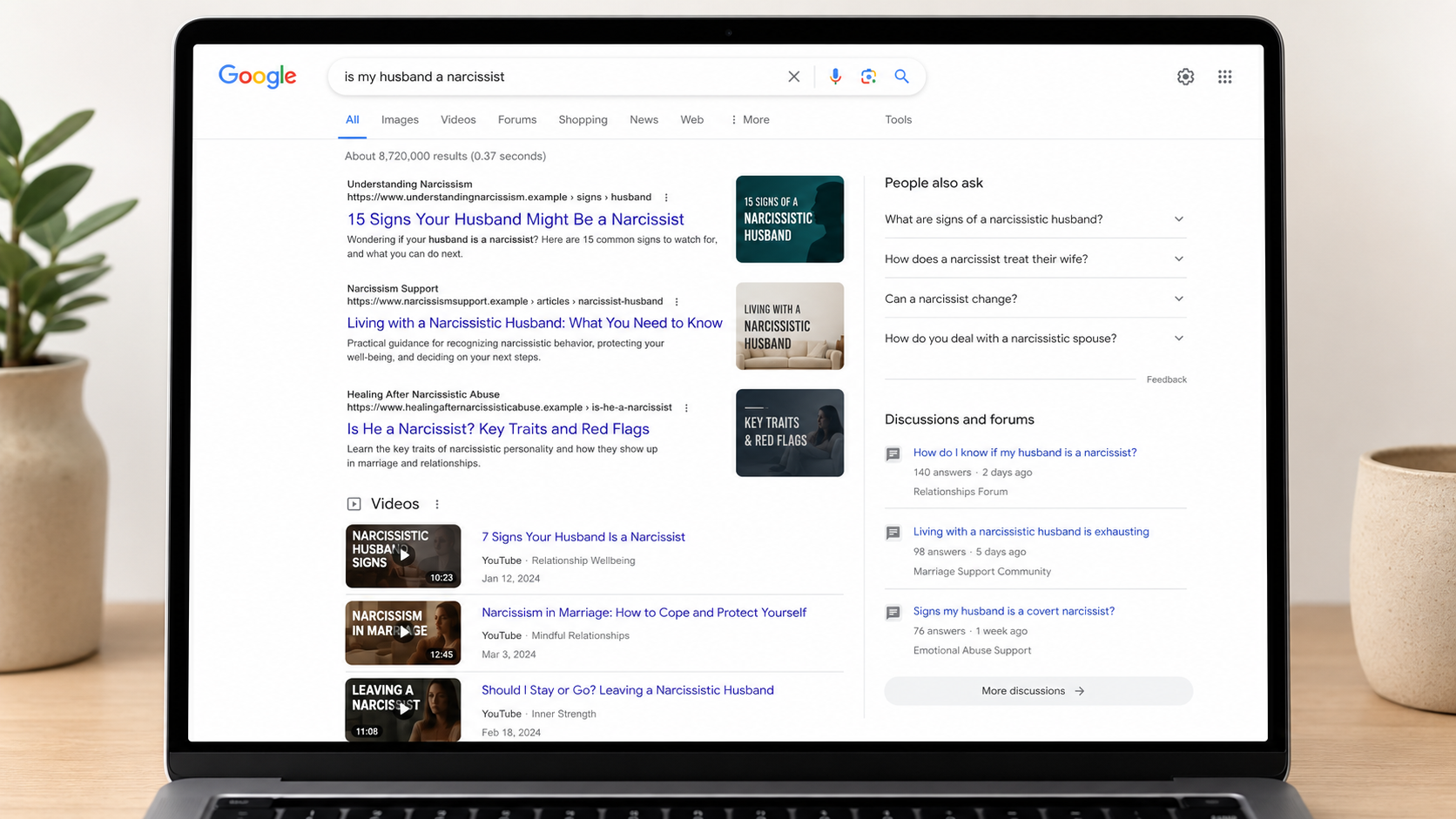
It wasn’t that I had suddenly found the whole truth and everything else disappeared. It was that I had trained the internet what to show me.
Not long ago, someone made a comment in one of my groups about men on the spectrum really just being narcissists. I have heard this claim before. It comes up a lot in certain neurodiverse marriage spaces, and honestly, it is one of those statements that can do a lot of damage when it gets repeated as if it is fact. Because I work in this field, I looked it up again to try to find a source they mentioned. I searched the connection between autism and narcissism, and almost immediately, my feed changed.
For days, I saw videos, posts, comments, reels, and “experts” affirming that exact claim. Autistic men are almost always narcissists. They lack empathy. They know exactly what they are doing. They are using autism as an excuse. They are emotionally abusive. They will never change. Over and over again, that was what I saw.

What I did not see was the other side. I did not see balanced research. I did not see nuanced explanations. I did not see content explaining the difference between autism, narcissistic personality disorder, shutdowns, alexithymia, trauma responses, emotional immaturity, selfishness, sin, and actual abuse. I did not see content saying, “Hold on, this is more complicated than that.” And there is plenty of research, information, and lived experiences that challenge the idea that autism and narcissism are commonly co-occurring. But none of that was being handed to me. Nothing I saw talked about the vitally important work of changing the environment, building better structure, reducing overwhelm, or helping someone with autism be set up for success so negative patterns are not the default.
That is the problem. The internet did not give me the full picture. It gave me more of what I had searched. Every reel, every suggested post, every video, every post in my feed, every comment section seemed to affirm the original claim. Not because the claim was automatically true. Not because there was no research to dispute it. Not because every autistic husband is secretly a narcissist. Not because there was more to the story. But because the algorithm was doing what algorithms do.
How the Algorithm Decides What You See

Facebook, Instagram, TikTok, YouTube, and other platforms are not neutral libraries. They are not designed to sit you down with a balanced stack of research and say, “Here are five perspectives. Let’s carefully discern what is true.” They are designed to keep you engaged.
Meta explains that Facebook Feed is personalized using machine learning systems that rank content based on predictions about what will be valuable to each user. TikTok says its recommendations are influenced by user interactions, video information, and account or device settings. YouTube says video suggestions are shaped by watch history, broader viewer trends, and current video topics. In normal-person language, these platforms are paying attention to what you do and then making predictions about what will keep you watching.
That means your searches matter. Your pauses matter. Your clicks matter. Your comments matter. Your saves matter. Your shares matter. Even the videos you hate-watch can matter because the platform may still read that as engagement. It does not necessarily know whether you watched because it helped you, scared you, validated you, angered you, or made you feel sick. It just knows you stopped scrolling.
And the more you stop, the more it learns.

The platform does not know your marriage. It does not know your spouse. It does not know your faith. It does not know your children, your history, your safety level, your actual options, the great things about your family, or the full story of what happens behind closed doors. It does not know whether your situation is abusive, misunderstood, repairable, hopeful, dangerous, immature, neurodiverse, trauma-based, or something else entirely. But it does know what keeps your attention. And when you are in pain, content that confirms your pain can be very hard to look away from.
That is why this gets so dangerous. The more you watch, the more you are shown. The more you are shown, the more normal it starts to feel. The more normal it feels, the more you may start to believe, “Everyone is saying this. This must be true.” But everyone is not saying it. Your feed is saying it. And your feed is not the whole world.
And it is worth remembering, your spouse may be searching too. Their feed may be shaping how they see the marriage, how they see you, how they understand conflict, and what they believe is possible. You may be searching for why they do not care, while they are searching for why they feel criticized, overwhelmed, controlled, or like they can never get it right. By the time you sit down to talk, you may both be carrying two completely different internet-trained stories.
Negative Content Gets Rewarded

This is the part most people do not think about enough. Negative content often performs well because it grabs attention. It makes people pause. It makes people comment. It makes people argue. It makes people share. It makes people feel validated, outraged, or afraid. And on social media, attention is currency.
Research on online news consumption found that negative words in headlines increased click-through rates, and each additional negative word in an average-length headline increased clicks significantly. That does not mean every negative post is wrong. It means negativity gets attention. And when something gets attention, the system has a reason to keep showing it.
This matters because social media platforms make money through attention. The longer you stay on the platform, the more content you consume. The more content you consume, the more ads can be shown. The more ads can be shown, the more money the platform can make. So even if nobody at Facebook, TikTok, Instagram, or YouTube is sitting in a room saying, “Let’s make this woman hate her husband,” the system itself is still built around keeping people engaged.
And fear keeps people engaged.
Outrage keeps people engaged.
Pain keeps people engaged.
Suspicion keeps people engaged.
Hopelessness keeps people engaged.
That is why content that says, “Your husband is selfish, abusive, narcissistic, and incapable of love” may travel faster than content that says, “This situation is complicated, and we need to separate autism, trauma, sin, immaturity, nervous system overload, communication breakdowns, and actual abuse before we decide what is true.”
One of those statements is emotionally explosive. The other requires patience, nuance, and discernment.
Guess which one usually gets more comments.
When the Algorithm Becomes Your Marriage CounselorWhen the Algorithm Becomes Your Marriage Counselor

This is where social media can quietly become a marriage counselor you never hired. It starts teaching you how to interpret your spouse. He forgets something important, and your feed has already told you he does not care. He shuts down during conflict, and your feed has already told you he is stonewalling you on purpose. He struggles to comfort you emotionally, and your feed has already told you he lacks empathy. He gets defensive, and your feed has already told you that is classic narcissism.
Before long, you are not just dealing with the moment in front of you. You are dealing with the moment, plus the last 47 reels you watched, plus the comment section full of strangers, plus the expert who told you there is no hope, plus the support group that has already decided men like your husband never change. That is a lot to bring into one conversation. No wonder your body feels activated before he even opens his mouth. No wonder every interaction feels loaded. No wonder you feel like you are drowning.
You are not just living your marriage anymore. You are living your marriage through a feed that has been trained by fear, pain, and suspicion.
This is especially true when you are searching things like:
“Why does my husband not care about my feelings?”
“Autism and emotional neglect.”
“Did my husband give me Cassandra Syndrome?”
“Is my husband a narcissist?”
“Why does my spouse shut down during conflict?”
“Neurodiverse marriage trauma.”
“Signs your husband does not love you.”
Those searches come from real pain. I searched plenty of them myself. Many, many times. When you are exhausted and confused, you search the words you have. But the problem is that those searches often start with an assumption already built in. They do not ask, “What is happening here?” or “Show me the view from every side.” They ask, “How do I prove this painful explanation is true?”
And the internet is more than happy to help.
Search for What Helps You See Clearly
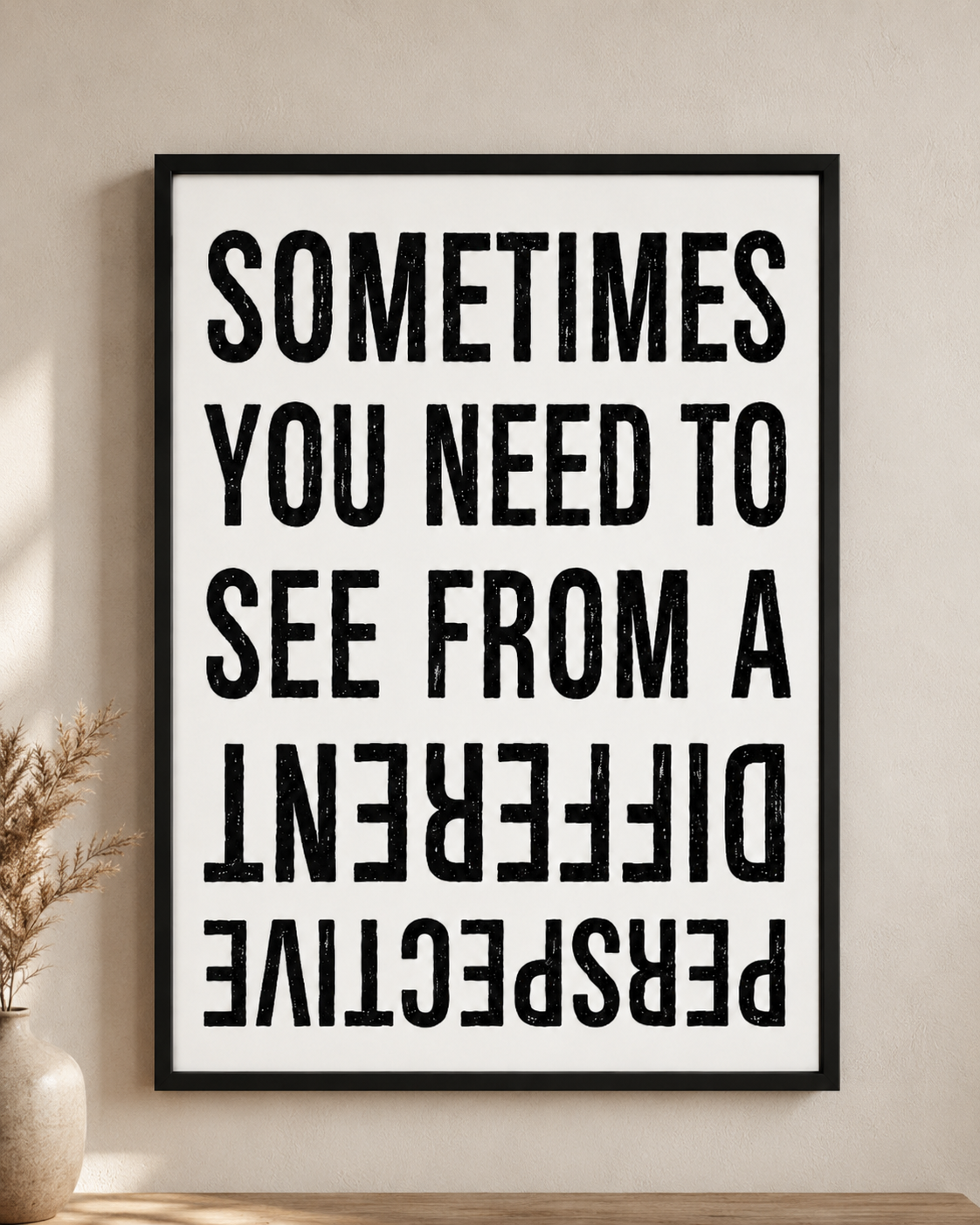
The goal is not to prove your spouse is the problem. The goal is to understand what is actually happening so you can respond wisely and start changing the cycle.
To do that, you have to remember there is another person in the equation. Another nervous system. Another perspective. Another history. Another set of needs, limitations, and patterns. That does not mean your pain is not real. It means you cannot understand the full picture if you only look at it from one angle.
Your spouse may be wrong, immature, selfish, shut down, overwhelmed, anxious, autistic, traumatized, sinful, or lacking the skills needed to do marriage well. But if you decide too quickly what it is, especially after days of fear-based content, you may respond to the story in your head instead of the actual pattern in front of you.
So slow it down. Separate what happened from what you think it means. “He did not answer me when I was crying” is what happened. “He does not care about me” is the meaning you attached to it. That meaning may be true, partly true, or wrong. But if you never separate the two, every painful moment becomes proof, and the negative narrative keeps growing.
A better question is not, “How do I prove my spouse is the problem?” A better question is, “What is actually happening here, and what response fits?” A skill gap, shutdown, selfish pattern, sin issue, anxiety response, autism, ADHD, or communication breakdown will not all need the same response. Different roots require different responses.
So search for what helps you understand and build, not just what helps you accuse. Look for repair after conflict, communication during shutdowns, healthy boundaries, reducing sensory overload, rebuilding emotional connection, stopping over-functioning, creating a conflict pause-and-return plan, or understanding the difference between shutdown and avoidance. Those searches lead somewhere very different than searches designed to prove your spouse is the problem.
Your feed may not be your fault, but it is still your responsibility to guard what you consume. If a group, expert, search result, podcast, reel, or comment section consistently drags you down, feeds contempt, makes you feel more hopeless, or keeps you stuck in anger without helping you move toward wisdom, stop consuming it. Start choosing content that tells the truth without feeding contempt.
You need truth, not just confirmation. You need clarity, not just content. You need wisdom, not an algorithm-trained panic spiral. And if you are a Christian, remember that taking every thought captive includes the thoughts that feel validated by the internet.
Stop Searching for What’s Wrong. Start Moving Toward Something Better.

That is where coaching can help.
At Neurodiverse Coaching, I do not build a plan around one diagnosis, one label, or one person’s perspective. I look at the full picture, including neurodiverse wiring, personality, communication patterns, faith, stress, family dynamics, emotional needs, responsibilities, environment, and your goals for the marriage.
This is not generic marriage advice or endless processing. It is practical, forward-focused support that helps you understand what is happening, identify what is keeping you stuck, and create a strategy for what needs to change next.
If you are tired of searching the internet and only feeling more confused, angry, or hopeless, it may be time for a different kind of support.
Book a coaching session with me at Neurodiverse Coaching, and let’s build a strategy for what changes next.