
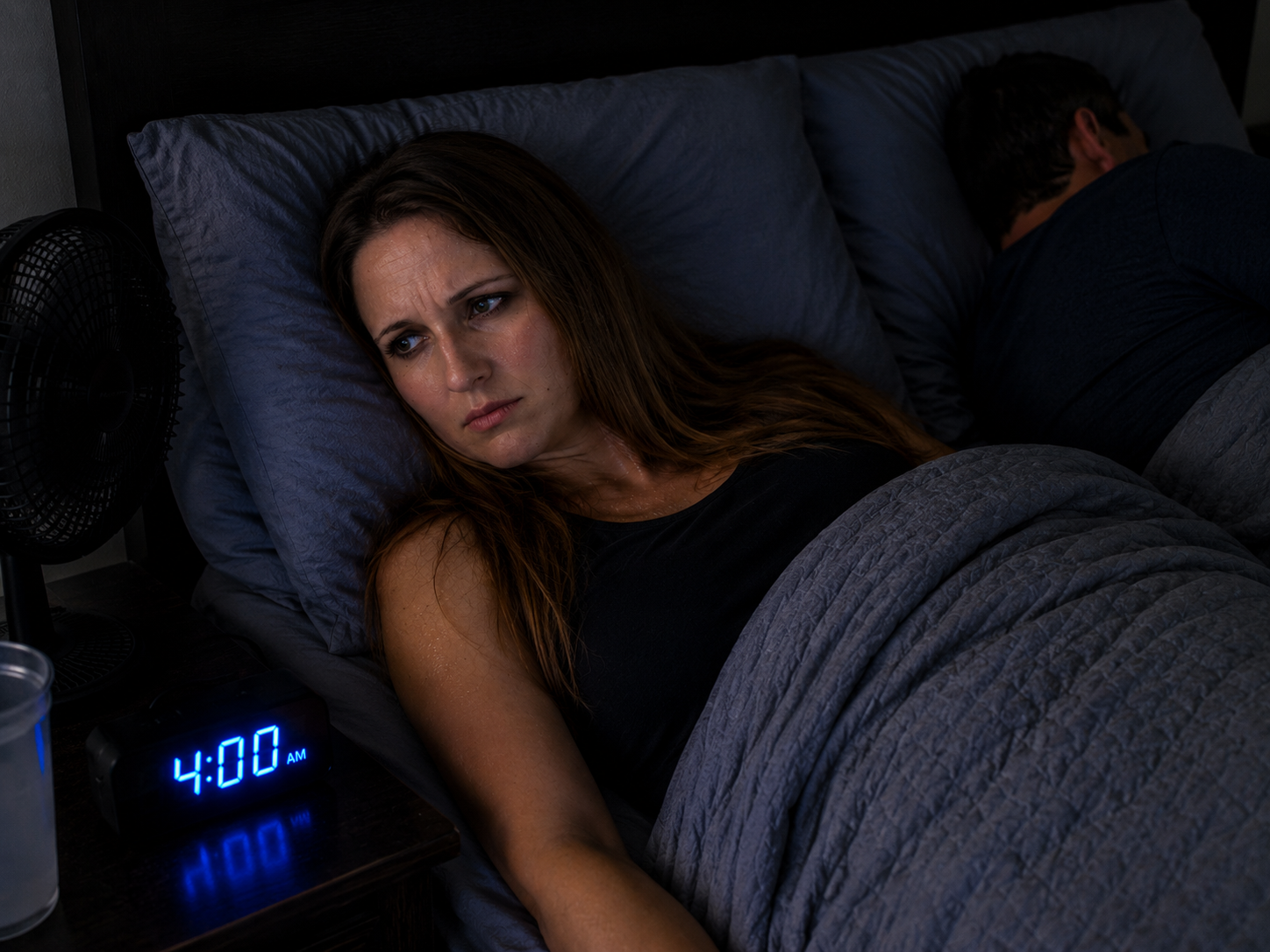
Its about 4 A.M. right now as I begin this blog. I’ve been up for an hour. I’m so hot I can’t stand it. Can’t sleep even though I’m EXHAUSTED. I’ll be lucky if I can go back to sleep again by 6, but there is no chance if I just lay here.
I had a good day yesterday. Great clients, saw a couple of major breakthroughs, had a really nice night with my husband. No nightmares, nothing is wrong, but here I am… night after night. Feeling like my internal thermostat has been hijacked by a toddler who found the controls and decided everything should be set to "inferno” at 2 A.M.
I had just turned 38 when I began having symptoms of perimenopause. It wasn’t a gradual onboarding to this new stage in life. It was like a dumpster fire and a five-alarm fire decided to join forces right before Christmas. The extra 40 pounds definitely wasn’t a welcome gift either. I went to see my doctor about what was happening. She welcomed me to the club…

I’m an extremely patient person. It’s a gift that has served me well in life and my career. Then perimenopause showed up and informed me that patience was apparently a limited resource, one I had to fight for. All the sudden my fuse is a little shorter with my family than I’d like it to be. ESPECIALLY when those hot flashes hit and my husband is cold. It’s like he gets cold flashes and wants to turn the thermostat to 75 and I’m over here like 55 sounds great.
If you're a neurotypical wife married to a husband with Autism, ADHD, or both, you may be discovering something similar. Perimenopause has a funny way of exposing systems that were never healthy to begin with. It will test everything.
Many women enter this season feeling their body has suddenly declared war. They become more emotional, more forgetful, more overwhelmed, less patient, and less capable of carrying the enormous mental load they've managed for years. The thermostat becomes a battle ground, as does other things. Their husbands often notice the changes but have no idea what's causing them. The result is that both people become frustrated, confused, and sometimes convinced their marriage is suddenly falling apart.
In reality, what is often happening is far less dramatic and far more predictable.
What Perimenopause Actually Does
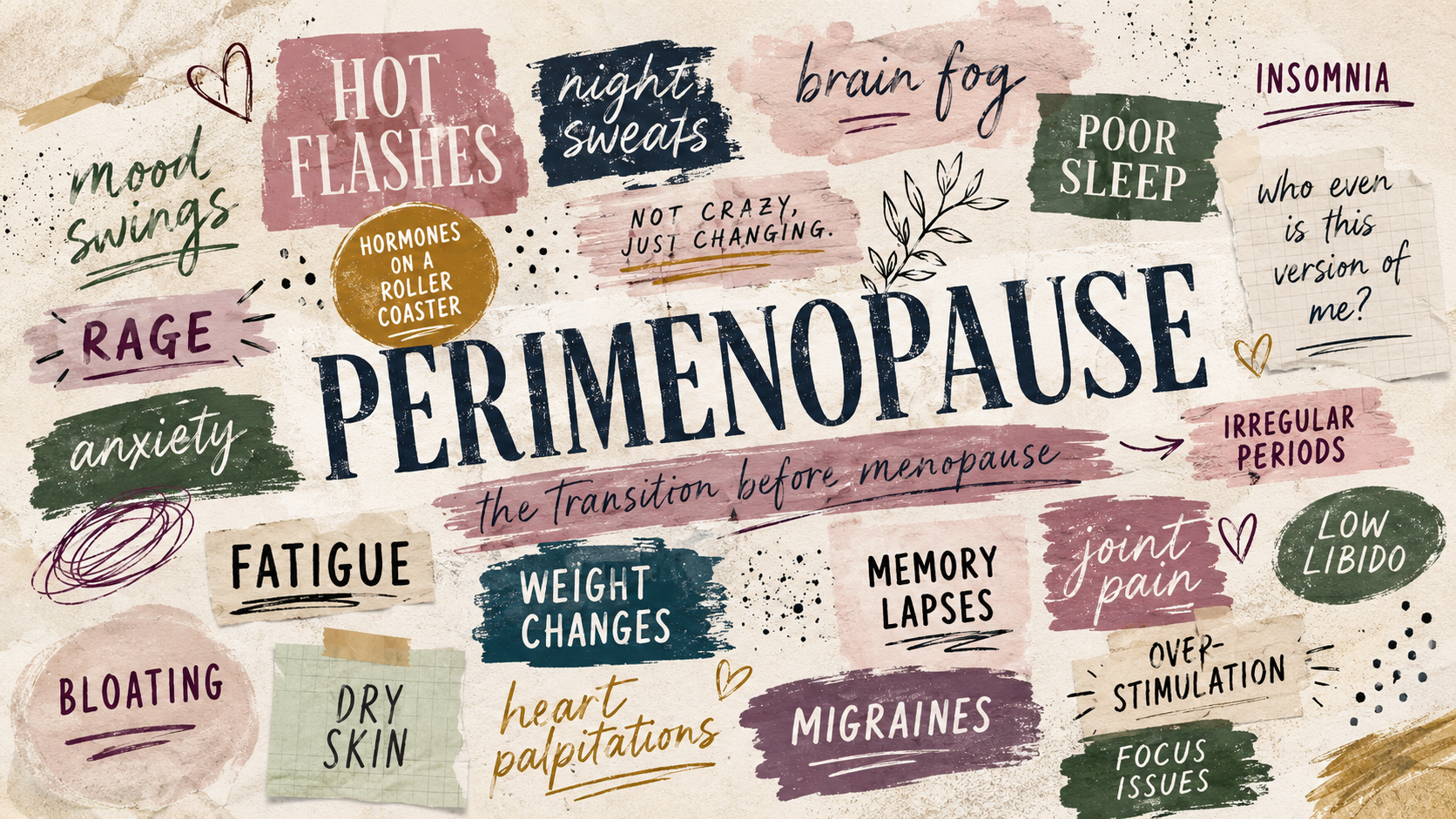
Most people think perimenopause is simply the stage before menopause when hot flashes begin. And while I can attest that can certainly be the case, the changes affect much more than body temperature.
The woman who has sometimes been more a Superwoman, who used to keep track of everyone's appointments, remember every birthday, manage the kid’s schedules, coordinate family events, monitor the budget, maintain relationships, and keep the household running suddenly discovers she doesn't have the same capacity she once did.
This is where neurodiverse marriages often hit a unique challenge.
As estrogen, progesterone, and testosterone fluctuate, women commonly experience:
Brain fog
Increased anxiety
Mood swings
Sleep disruption
Reduced stress tolerance
Memory challenges
Irritability
Fatigue
Difficulty concentrating
Increased emotional sensitivity
The list goes on…
In other words, many of the skills that have helped a neurotypical wife manage a neurodiverse household begin to require significantly more effort.
The Mental Load Collision
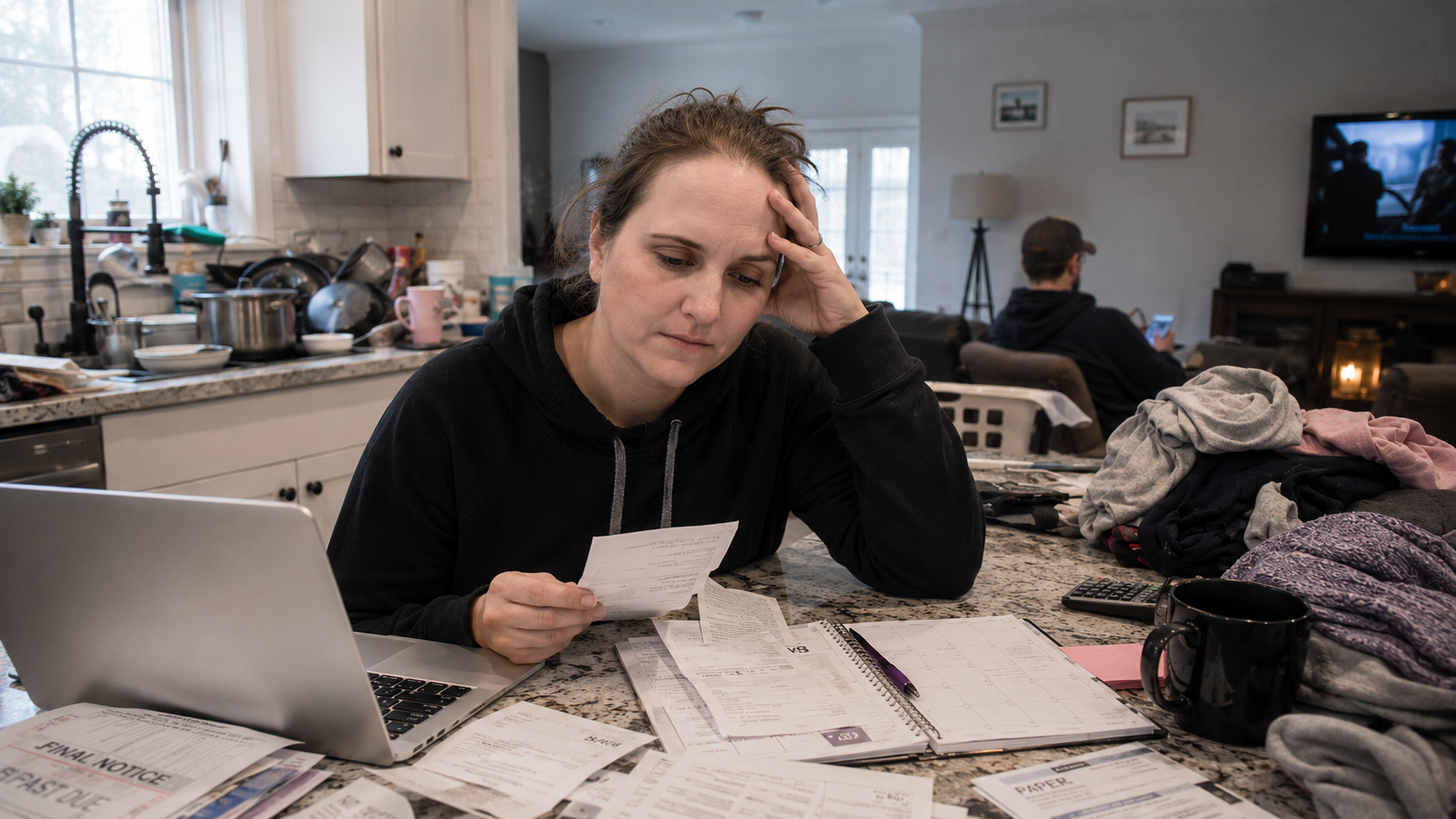
One of the most common patterns I see in coaching is that neurotypical wives become the executive functioning support system for the entire family. It definitely doesn’t have to be this way and can certainly be changed, but its often the default coping function.
Over time they begin compensating for gaps that may exist due to Autism, ADHD, or both. Most don't even realize how much they are carrying because they've been doing it for so many years. (This often starts well before neurodivergence is on anyone’s radar and is a very natural progression in a neurodiverse marriage when a wife is neurotypical and the husband is neurodiverse.)
Then perimenopause arrives and essentially says:
"Yeah... we're not doing all that anymore." Or “We’re going to up the level of the challenge”
Suddenly the wife who once remembered everything is forgetting things herself. The woman who could keep ten plates spinning now struggles to keep three in the air.
This often creates tension because neither spouse fully understands what is happening. The wife feels overwhelmed and unsupported. The husband feels criticized and confused.
The wife feels overwhelmed and unsupported. She starts wondering why she's still responsible for everything. Discontentment grows. Resentment increases.
The husband thinks:
"Why is she suddenly upset about things that never seemed to bother her before?" He becomes more on edge and doesn’t know what to expect. This can lead to him living more in the realm of fight or flight, which often leads to more meltdowns and shutdowns. This escalates things to a whole new level.
Both perspectives make sense from where they're standing. Neither side is set up for success. Both are struggling. Both could use some help and some grace.
When Autism Enters the Picture
For autistic husbands, this season can be particularly confusing because autism often relies heavily on predictability and patterns.

For years your husband may have learned a version of you that felt stable and understandable. Then perimenopause arrives and suddenly your emotional responses don't follow the same predictable pattern.
You cry over something that normally wouldn't affect you. (This often makes him feel he either has to fix it or he is the cause, creating shame).
You become overwhelmed more quickly.
You need more support.
You need more rest.
You have less capacity for endless explanations, repeated questions, or being everyone else's emotional support system.
From your perspective, you're exhausted.
From his perspective, the rules seem to have changed.
Many autistic husbands attempt to solve the problem logically. They are looking for facts. For a manual on how to fix things.
Unfortunately, perimenopause is not a software bug.
It cannot be fixed with a spreadsheet, optimized with a flowchart, or solved through a detailed analysis of why you're crying seemingly to him out of the blue.
Sometimes what is needed most is empathy rather than solutions. But without understanding what is actually happening, empathy is not the default go to.
When ADHD Joins the Party

If ADHD is part of the equation, things can become even more complicated.
Many neurotypical wives have unknowingly compensated for executive functioning challenges for years. They become the reminder system, the planner, the organizer, and the project manager of the household.
When perimenopause reduces their capacity to do that, cracks begin to appear everywhere.
Bills get missed. Appointments are forgotten. Projects remain unfinished. Responsibilities become unclear. Resentment begins building on both sides.
The wife feels abandoned.
The husband feels like nothing he does is enough.
The truth is that neither spouse is the enemy. The problem is that the old system has stopped working. The wife has different needs during this stage of life and so does the husband.
What Actually Helps

Here's the good news.
While perimenopause may feel like someone secretly increased the difficulty setting on your life, it doesn't have to destroy your marriage. In fact, for many couples, this season becomes the catalyst for making changes that should have happened years ago.
The first step is recognizing that this isn't just a marriage problem.
I can't tell you how many women have reached out to me convinced their marriage is over, that their husband has changed and doesn’t care. Only for when deep diving to discover that isn’t the case. Their husband cares more than she could ever imagine. But he’s lost, full of shame, and has no idea what to do or how to fix things. Often, the perimenopause stage of life amplifies this.
Likewise, I've worked with couples who thought their marriage was falling apart after being together for 15, 20, 25 years when what was really happening was that a wife who had spent years compensating for everyone else suddenly no longer had the capacity to do so.
These marriages aren’t broken beyond repair. You aren't broken. Your husband isn’t broken.
The system is broken. And systems can be changed.
Stop Carrying Everything Yourself

This is the point where many women roll their eyes and say, "That sounds great, Meg, but if I don't do it, it doesn't get done."
Trust me. I get it.
But if you've spent years acting as the family's executive functioning department, personal assistant, social coordinator, house keeper, scheduler, event planner, memory bank, and emotional support animal, perimenopause is probably going to force a reckoning. You may need to stop rescuing. You may need to stop reminding. You may need to stop overfunctioning.
Not because you don't love your husband, but because constantly compensating often prevents both people from seeing where the actual challenges exist.
This doesn't happen overnight, and it shouldn't be done recklessly. But healthy marriages require shared responsibility, not one exhausted woman carrying the entire family on her back. They require both partners to be set up for success and not failure. If you have kids, they can help too…
Build Support Around Capacity, Not Control
One of the biggest shifts that often needs to happen during perimenopause has nothing to do with making a better checklist. It has to do with recognizing that capacity has changed.
For years, many neurotypical wives function as the emotional center and invisible glue of the family. Sometimes this happens because no one else knows what needs to be done. Sometimes it happens because doing it yourself feels easier than explaining it. Sometimes it happens because you tried asking for help and somehow ended up managing the help too.
Then perimenopause arrives and your body says, “Absolutely not. We are no longer running a Fortune 500 company from this kitchen.”

This is where couples need to stop asking, “How do we get her back to normal?” and start asking, “How do we build a life that does not require one woman to operate at superhuman capacity?”
That may mean simplifying expectations, reducing commitments, dividing responsibilities differently, creating predictable rhythms, or deciding what no longer needs to be done at all. The goal is not to control your husband, assign him a hundred new tasks, or create another system you have to manage.
The goal is to make the household sustainable for both of you.
Because if the entire family only functions when one woman is well-rested, hormonally stable, emotionally regulated, highly organized, spiritually grounded, and carrying the mental load of six people, that is not a marriage system.
That is a one-woman emergency response unit. Its unhealthy. Eventually, even the emergency response unit needs backup.
Educate Your Husband
Many husbands know almost nothing about perimenopause. Heck most doctors don’t know anything about it. Some have heard of hot flashes. Some think your sex drive disappears. Others think it suddenly goes into overdrive.
Very few understand that it can impact:
Sleep
Anxiety
Temperature
Emotional regulation
Body weight
Focus
Memory
Stress tolerance
Energy levels
Sensory overwhelm
And much, much more…
If your husband is autistic, facts often help. If your husband has ADHD, concrete examples often help. I’ll say it a million times, FACTS = DATA.
The more he understands what's happening, the less likely he is to personalize every emotional reaction or assume he's doing something wrong. The less likely he is to shut down. The more likely he is to help and be more effective.
Give Each Other Grace

I know that sounds cliché. I also know it's true.
Many wives are frustrated because they're exhausted. Many husbands are frustrated because they feel confused, criticized, or like the target keeps moving.
Both people are hurting. Both people are trying. Even if it doesn’t seem like it. Both people are often interpreting the other's behavior through their own lens.
This season requires more curiosity and less negative assumption. Assume positive intent first.
More conversations and fewer accusations. More teamwork and less scorekeeping. More forgiveness…
Marriage was never meant to be husband versus wife. It's supposed to be husband and wife facing life's challenges together. Perimenopause, autism, ADHD, stress, exhaustion... those are the things you're up against. Your spouse is not. The moment we start treating each other like the enemy, everybody loses.
You Don’t Have to Face This Alone
If perimenopause and neurodiverse marriage have teamed up like an unholy buddy comedy in your home, you don’t have to figure it out alone.
I live this personally and coach it professionally.
At Neurodiverse Coaching, I help individuals and couples create practical strategies for communication, responsibilities, emotional regulation, connection, and faith, without pretending a bubble bath and a chore chart will fix everything.
Schedule a consultation today and let’s talk about what’s happening in your marriage, before the thermostat becomes grounds for divorce.
Learn more: Frequently Asked Questions